Project Development Roadmap

From Foundation to Legacy

A structured development path connecting research, scholars, grants, producers, public presence, fundraising, production, distribution, and education.

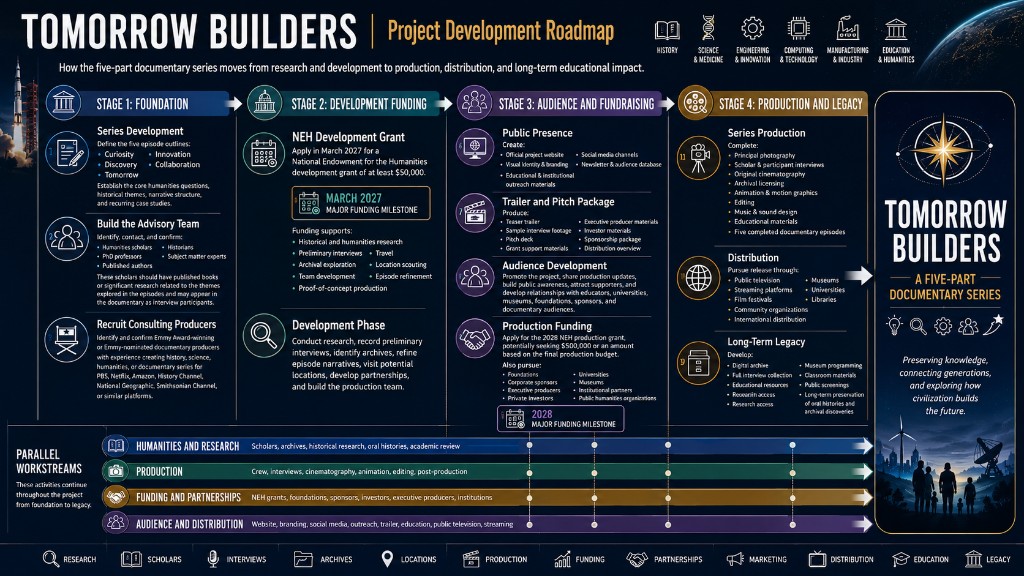
Tomorrow Builders project development roadmap infographic showing four project stages and parallel workstreams.
Download Infographic

Stage 1

Foundation

  • Define the five episode outlines
  • Establish the core humanities questions
  • Establish the narrative framework
  • Identify recurring case studies

Stage 2

Development Funding

March 2027 NEH Development Grant

Apply in March 2027. Minimum target: $50,000.

Stage 3

Audience and Fundraising

  • Official website
  • Branding
  • Social media
  • Newsletter and audience database
  • Educational outreach materials

Stage 4

Production and Legacy

  • Principal photography, scholar and participant interviews
  • Original cinematography and archival licensing
  • Animation, motion graphics, editing, music, sound design
  • Educational materials and five completed episodes
Humanities and ResearchScholars, archives, historical research, oral histories, academic review
ProductionCrew, interviews, cinematography, animation, editing, post-production
Funding and PartnershipsNEH grants, foundations, sponsors, investors, executive producers, institutions
Audience and DistributionWebsite, branding, social media, outreach, trailer, education, public television, streaming
Accessible Text Version

Roadmap Summary

The project begins with series development and advisory recruitment, moves into a March 2027 NEH Development Grant, builds audience and fundraising infrastructure, pursues a 2028 NEH Production Grant, and completes production, distribution, and preservation work.

Major Milestones

March 2027: NEH Development Grant application, minimum target $50,000.

2028: NEH Production Grant application, potential target around $500,000 depending on final budget.

Long View

The final legacy includes a digital archive, full interview collection, educational resources, museum programming, classroom materials, public screenings, and research access.